


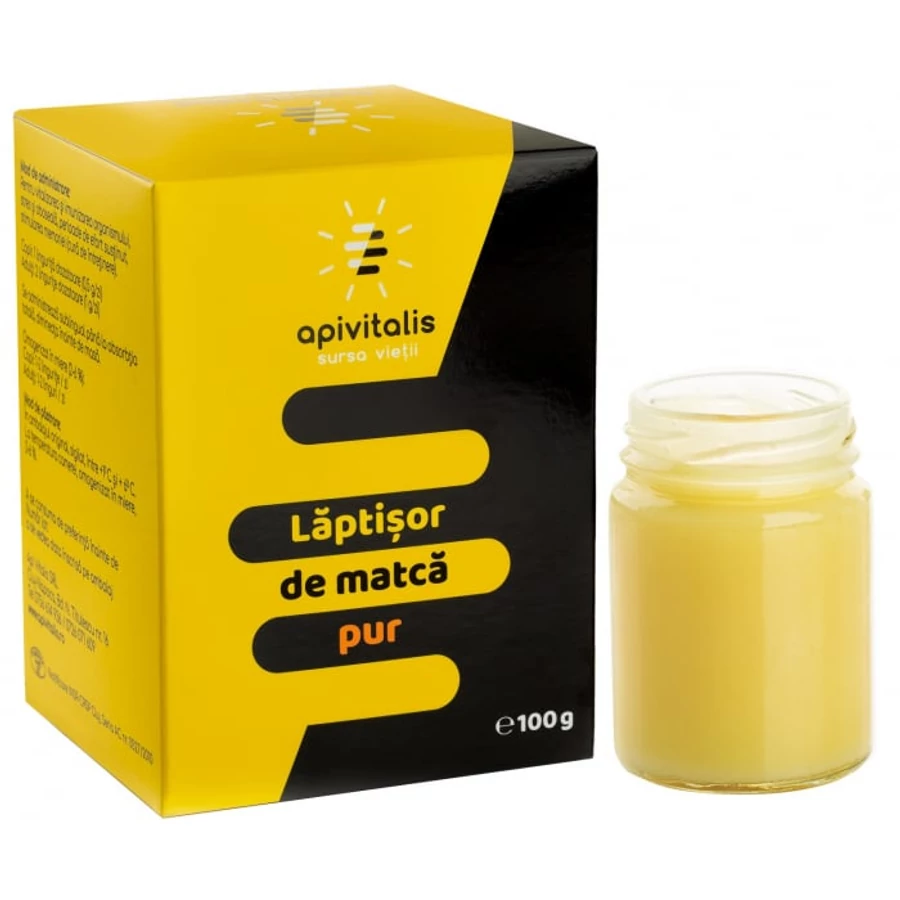


Fresh, pure royal jelly is a yellowish-white natural superfood with a thick, slightly gelatinous consistency, produced by worker bees from their hypopharyngeal glands. These glands are among the exocrine glands, meaning glands that excrete externally, and therefore royal jelly does not contain hormones in the true sense of the word. Nevertheless, it can have a beneficial effect on the body by supporting the natural balance of the hormonal system through its influence on the pituitary gland – the gland that regulates hormonal balance in the body.
Royal jelly is the exclusive food of the queen bee throughout her entire life. Thanks to this exceptional source of nutrients, the queen bee can live up to 8–10 years, while worker bees, who do not consume it, live only about two months. Royal jelly is rich in biologically active substances and is traditionally considered one of the most valuable natural foods that support the body's vitality.
Regular consumption of royal jelly can contribute to supporting the body's immunity, vitality, and overall energy. It is often used for fatigue, exhaustion, or during periods of increased physical and mental strain. It can help support sleep quality, mental balance, and the body's regeneration. It is also traditionally used to support the health of blood vessels, bones, and the nervous system. Royal jelly is also popular for supporting male and female fertility and during hormonal changes, such as during the menopause.
Thanks to its unique composition, it is suitable for children and adults alike, and represents a natural source of energy, vitamins and biologically active substances.
Composition
Fresh, pure royal jelly is a complex natural substance whose main components are water, proteins, carbohydrates, fatty acids, vitamins and minerals. The water content accounts for approximately 60–70 % and gives it its characteristic thick consistency. Proteins and amino acids account for approximately 12–15 % and consist mainly of so-called MRJP proteins (Major Royal Jelly Proteins), particularly MRJP1. Royal jelly also contains all eight essential amino acids – isoleucine, leucine, lysine, methionine, phenylalanine, threonine, tryptophan and valine. Carbohydrates make up approximately 10–16 % and consist mainly of fructose and glucose. Fatty acids account for approximately 3–6 %, the most significant of which is 10-hydroxy-2-decenoic acid (10-HDA), which is considered to be the characteristic bioactive compound of royal jelly.
Royal jelly is extremely rich in B vitamins – especially vitamins B1, B2, B3, B5, B6, B7, B8 and B9. In smaller amounts, it can also contain vitamins A, C, D and E. In addition, it contains a number of minerals and trace elements, such as potassium, calcium, magnesium, zinc, iron, manganese, copper, phosphorus, sulphur or silicon. Royal jelly also contains enzymes, nucleic acids (DNA and RNA) and biologically active substances that can support cell regeneration.
Dosage
It is recommended to take approximately 0.5–1g of fresh royal jelly daily, the best taken in the morning on an empty stomach. Royal jelly should be slowly dissolved under the tongue for better absorption of the active ingredients. A lower dose of approximately is recommended for children 0.2 – 0.5 g this by age.
Storage
Store in refrigerator at a temperature of 2 – 5 °C, Protect from light and heat. Once opened, consume as soon as possible to maintain freshness and product quality.
Notice
Food supplement. Do not exceed the recommended daily dose. The product is not a substitute for a varied and balanced diet and a healthy lifestyle. Not suitable for people allergic to bee products. Keep out of reach of small children. If pregnant, breastfeeding or have health problems, consult a doctor before use.


Reviews
There are no reviews yet.