


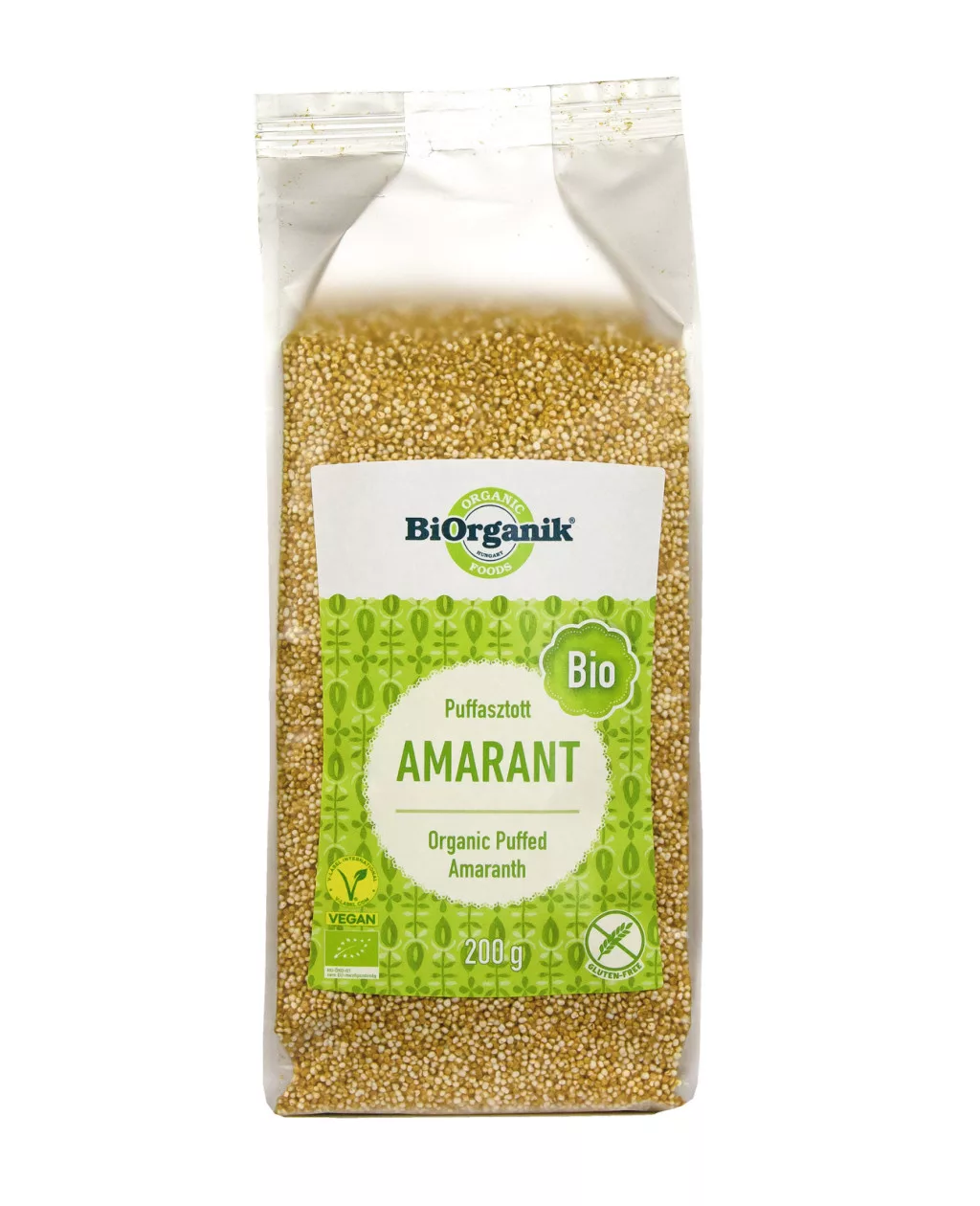

A Organic amaranth It is a naturally gluten-free pseudo-cereal native to South America. Amaranth has been known and cultivated for thousands of years, and in recent decades it has gained attention mainly due to its nutritional value.
It stands out in particular for high in protein and fat is rich in iron. As it is naturally gluten-free, it is also suitable for people who avoid gluten.
Significance and characteristics: Compared with most cereals and pseudocereals, amaranth has a lower carbohydrate content and a higher protein and fat content. Its protein composition is favourable, and it contains a significant amount of lysine amongst the essential amino acids. Polyunsaturated fatty acids predominate amongst the fatty acids.
It is high in fibre, which aids digestion. Amongst cereals, amaranth is also notable for its iron content. Its calcium, magnesium and zinc content is also worth noting.
Amaranth also naturally contains certain antinutrients, such as oxalic acid and phytic acid, which may affect the absorption of certain minerals.
Application: You can add amaranth to muesli or use it when making cakes, biscuits and energy bars. It is also suitable for coating or for making various fillings.
Composition: amaranth*
Average nutritional values per 100 g: • Energy: 1565 kJ / 371 kcal • Fat: 4.9 g • of which saturated fatty acids: 1.5 g • Carbohydrates: 65.1 g • of which sugars: 1.1 g • Protein: 12.4 g • Salt: 0.01 g
Gluten-free: Yes
BIO: Yes
Storage: Store in a cool, dry place.
Country of origin: Stated on the packaging.
Packaging: 200g


Reviews
There are no reviews yet.